Self-Trust, Operational Intelligence, and Learning to Make Room for Herself
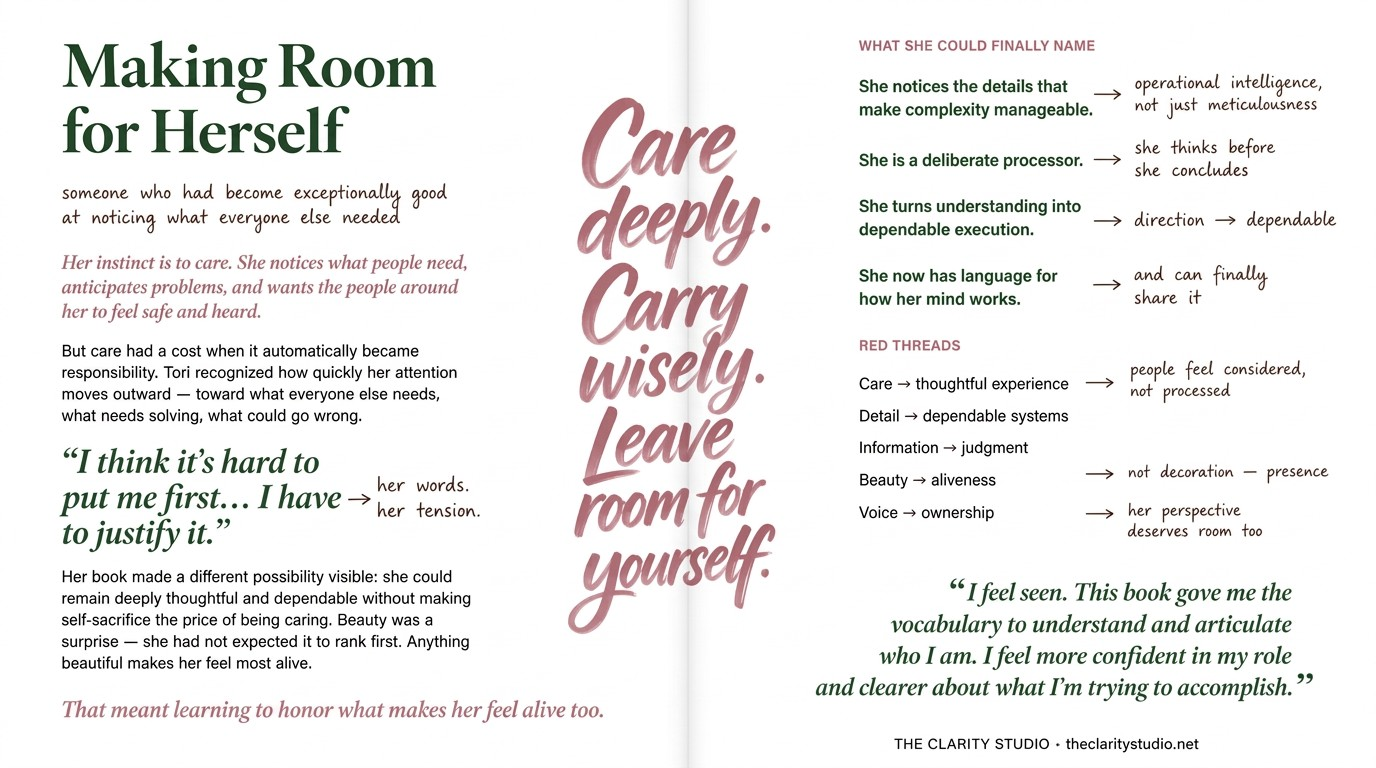
Inspired by the two-page reflections I create for every book I read, this spread is a visual distillation of the client’s story—their full Clarity experience is captured in a personalized book and Individual Growth Plan.
Tori came to The Clarity Studio already highly capable. She was working in operations and customer success, managing complexity, anticipating problems, creating structure, and helping other people feel supported along the way. What was less clear to her was how to describe the way she did those things. She could read other people well, but she had a much harder time explaining her own internal process—how she took in information, made decisions, noticed what others missed, or why certain environments and responsibilities fit her better than others. After reading her book, she said that it gave her “more vocabulary” for who she is and helped her share that part of herself with other people.
One of the clearest patterns across Tori’s story was the way care and competence travel together. She does not only notice whether something is efficient. She notices what the experience feels like for the person moving through it. Details matter because they can prevent confusion. Systems matter because they can reduce stress. Preparation matters because someone is relying on the outcome. Her colleagues described her as the person they want involved when something is difficult, complex, or important because her presence tends to create calmer, more dependable results.
That strength also carried a cost. Tori recognized how easily noticing a problem could become feeling responsible for solving it. She described the pressure she places on herself when a process is not working well: “I need the system to be flawless.” She also named the deeper personal tension underneath that pattern: “I think it’s hard to put me first… I have to justify it.” When her attention moved automatically toward what everyone else needed, caring could turn into over-carrying.
Her values helped make that tension more understandable. Tori cares deeply about people, but her life is not meant to be organized around self-sacrifice. She also discovered how important beauty, atmosphere, and presence are to her. Beholderism ranked first—something she had not expected until she began noticing how strongly she responds to thoughtful spaces, architecture, nature, craftsmanship, and environments that feel intentionally created. As she put it, “anything that’s beautiful makes me feel most alive.”
Her cognitive results added another layer. Tori’s Fact Checker pattern reflected a deliberate mind that prefers enough information before reaching a conclusion. That felt immediately accurate to her—and so did the tension inside it. She acknowledged that sometimes all the facts will never arrive, and she will have to make the best judgment she can with the information available. For someone whose care often shows up through preparation, that distinction mattered: thoroughness is a strength, but certainty cannot become a prerequisite for action.
The deeper recognition was that Tori’s attention to detail was not simply meticulousness. It was operational intelligence. She is particularly effective when something real needs to be improved, organized, clarified, or carried forward—the point where direction has to become dependable. That helped reframe traits she may have experienced as ordinary into capacities with real value: deliberate processing, thoughtful execution, strong follow-through, and the ability to make complexity more manageable for other people.
PIE360 then gave Tori an outside mirror. The people around her already experienced the qualities she was still learning to trust: authenticity, kindness, thoughtfulness, empathy, reliability, support, and steadiness. Tori agreed with the feedback, but the growth edge was clear too: she needed to trust herself more. When asked later how that was going, she answered, “Much better.” She described feeling more confident in her role and clearer about what she was trying to accomplish.
The result of Tori’s process was not a new personality or a prescribed career direction. It was language. Language for how she processes information. Language for why she is good at operations. Language for the difference between care and over-responsibility, preparation and trust, candor and Voice. And with that language came something more durable: the ability to recognize her own contribution and explain it to someone else.
Tori said it simply:
“I do feel seen… this Clarity book gives me more vocabulary of who I am.”
For Tori, clarity did not mean figuring out one perfect next step. It meant understanding herself well enough to own the role she is already growing into—and to make room for herself inside the life she is so naturally skilled at helping everyone else navigate.